

If you’ve recently bought a car, are planning an interstate move, or simply need to renew your registration, you’ve probably realised that vehicle registration in Australia isn’t as straightforward as it first appears. Every state and territory has its own rules, timeframes, inspection requirements and registration fees, which can make the process confusing, especially if you’re dealing with an interstate purchase or relocating to a new state.
Car registration, commonly known as rego, is a legal requirement for almost every vehicle driven on Australian roads. Beyond allowing you to drive legally, it links the vehicle to its registered owner, confirms that mandatory insurance requirements have been met where applicable, and ensures the vehicle complies with state registration laws.
The process itself isn’t difficult once you understand the requirements. The challenge is knowing which documents you need, whether your vehicle requires a roadworthy inspection, how registration transfers work, and what changes when you’re moving between states. Missing a deadline or overlooking a requirement can result in unnecessary fees, delays, or even fines.
This guide explains everything you need to know about car registration in Australia, including how to register a new or used vehicle, transfer registration, register an interstate vehicle, understand compulsory insurance, and navigate the different requirements across every Australian state and territory. If you’re also relocating and need to move your vehicle, we’ll explain how professional transport services can simplify the process while you focus on completing your registration.
What Is Car Registration?
Car registration is the legal process of recording a vehicle with the transport authority in the Australian state or territory where it will be used. Once a vehicle is registered, it is issued with registration details and number plates that allow it to be driven legally on public roads.
Registration does more than simply identify a vehicle. It connects the vehicle to its registered operator, helps authorities maintain accurate ownership records, and ensures mandatory registration requirements have been met before the vehicle is used on Australian roads.
Every Australian state and territory has its own registration rules, but the purpose remains the same. Every registered vehicle must comply with the requirements of the local transport authority, and owners are responsible for renewing their registration before it expires or updating their details after purchasing or relocating a vehicle.
What Does Vehicle Registration Include?
Depending on your state or territory, vehicle registration may include:
- A registration certificate or digital registration record
- Official Australian number plates
- Registration fees and government charges
- Compulsory Third Party (CTP) insurance in most states (or a separately purchased Green Slip in New South Wales)
- Vehicle details recorded with the relevant transport authority
What Vehicle Registration Does Not Cover
Many people assume registration provides complete protection for their vehicle, but that’s a common misunderstanding.
Vehicle registration commonly does not include:
- Comprehensive car insurance
- Cover for damage to your own vehicle
- Theft or fire protection
- Mechanical repairs or servicing
- Manufacturer or dealer warranties
For example, if your vehicle is damaged in a collision or stolen, registration alone won’t cover the financial loss. Comprehensive insurance is a separate policy that provides broader protection and is worth considering, particularly for newer or higher-value vehicles.
Understanding what registration does—and doesn’t—cover can help you avoid unexpected surprises and ensure you’re adequately protected before getting behind the wheel.
When Do You Need to Register a Vehicle?
There isn’t a single situation where vehicle registration applies. Depending on how you’ve acquired the vehicle or whether you’re relocating, the registration process can be quite different. Understanding which scenario applies to you will help you prepare the right documents and avoid unnecessary delays.
Buying a Brand-New Car
Buying a new vehicle from a licensed dealership is normally the simplest situation. In most cases, the dealer will organise the registration before you take delivery of the vehicle.
This typically includes lodging the registration application, arranging the number plates, collecting the applicable registration fees and, where required, organising Compulsory Third Party (CTP) insurance.
Before driving away, it’s still worth confirming exactly what’s included in the purchase. Your dealer can explain when your registration expires, provide your registration details and advise when your first renewal will be due.
Buying a Used Car
Purchasing a used vehicle requires a little more attention, particularly if you’re buying from a private seller.
While the vehicle may already be registered, the registration doesn’t automatically transfer into your name. As the new owner, you’ll need to complete a registration transfer within the timeframe specified by your state’s transport authority. This often involves providing proof of purchase, verifying your identity and paying the applicable transfer fees and stamp duty.
Some states also require a current roadworthy or safety inspection certificate before ownership can be transferred, while others only require an inspection under specific circumstances.
Before completing the purchase, it’s also a good idea to confirm that the registration is current and that the vehicle identification details match the paperwork provided by the seller.
Buying a Vehicle from Another State
Buying a car interstate has become increasingly common, especially when a better price, lower kilometres or a specific model isn’t available locally. However, purchasing a vehicle from another state involves more than simply arranging transport.
Once the vehicle arrives, you’ll need to register it in your home state or territory. This may involve cancelling the previous registration, obtaining a roadworthy or inspection certificate if required, surrendering the existing number plates and completing a new registration application with your local transport authority.
Every state has slightly different requirements, soCheck the official registration process before purchasing the vehicle. Planning ahead can save both time and unexpected costs once the car arrives.
Moving Interstate
If you’re relocating permanently to another Australian state or territory, your existing registration won’t transfer automatically.
Instead, you’ll need to register the vehicle in your new state within the required timeframe. This process often includes arranging a vehicle inspection where applicable, submitting the necessary documents, returning your previous state’s number plates and paying the new registration fees.
Many people leave this until after they’ve settled into their new home, but it’s one of the first administrative tasks worth organising. Completing the registration promptly helps you remain compliant with local laws and avoids unnecessary penalties for late transfers.

Documents Required to Register a Vehicle in Australia
The exact paperwork required to register a vehicle varies between Australian states and territories, but the core requirements are commonly the same. Having everything prepared before you begin the application can make the process much quicker and reduce the chance of delays.
The table below outlines the documents you’ll commonly be asked to provide.
| Document | Purpose |
| Proof of identity | Confirms your identity, with an Australian driver’s licence or another accepted form of identification. |
| Proof of ownership | Demonstrates that you legally own the vehicle, such as a tax invoice, purchase receipt or bill of sale. |
| Vehicle Identification Number (VIN) | Used to verify the vehicle’s identity and ensure the registration records match the vehicle. |
| Engine number | Required by some states to confirm the vehicle’s details during registration. |
| Current registration details | Needed when transferring ownership of a registered vehicle or changing registration between states. |
| Roadworthy or safety certificate | Required in certain situations, depending on your state or the vehicle’s registration status. |
| Compulsory Third Party (CTP) insurance | Required before registration where it isn’t automatically included as part of the registration process. |
| Completed registration application | The official application form issued by your state’s transport authority. |
Although this list covers the documents most people will need, some situations may require additional paperwork. For example, registering an unregistered vehicle, importing a vehicle, or transferring ownership after a deceased estate can involve extra documentation.
If you’re unsure what’s required, it’s always worth checking the official transport authority in your state before lodging your application. Doing this helps avoid unnecessary trips and ensures your registration can be processed without delays.
Tip: Before buying a used vehicle, confirm that the VIN on the vehicle matches the registration documents and sales paperwork. It’s a simple check that can help prevent ownership disputes and registration issues later.
How to Register a Car in Australia (Step-by-Step)
The registration process isn’t identical across Australia, but the basic steps are much the same regardless of where you live. Whether you’re registering a used vehicle, changing interstate registration or registering a car for the first time, following the registration process will help you understand what’s involved.
Step 1: Check Your State’s Registration Requirements
Start by visiting the transport authority website for the state or territory where the vehicle will be registered. This will confirm whether you need a vehicle inspection, what documents are required and whether any additional forms need to be completed.
Step 2: Gather Your Documents
Before lodging your application, make sure you have all the required paperwork ready. This typically includes proof of identity, proof of ownership, vehicle identification details and any inspection certificates required for your situation.
Preparing these documents in advance can significantly reduce delays during the registration process.
Step 3: Complete Any Required Vehicle Inspection
Some vehicles require a roadworthy inspection, safety certificate or other authorised inspection before registration can be approved.
Inspection requirements vary depending on factors such as:
- The state or territory where you’re registering the vehicle
- Whether the vehicle is currently registered
- Whether you’re transferring registration from another state
- The age and condition of the vehicle
We’ll explain the different inspection requirements in more detail later in this guide.
Step 4: Arrange Compulsory Third Party (CTP) Insurance
If you’re registering your vehicle in New South Wales, you’ll often need to purchase a Green Slip before completing your registration.
In most other Australian states and territories, CTP insurance is automatically included as part of the registration fee, although the arrangements differ between jurisdictions.
Step 5: Lodge Your Registration Application
Once you’ve gathered all the required documents, lodge your application with your state’s transport authority. Depending on the state, this may be available online, at a service centre or through an authorised registration office.
Step 6: Pay the Registration Fees
Registration fees vary across Australia and are influenced by several factors, including your vehicle type, weight, engine specifications and registration period.
We’ll look at registration costs in more detail later in this guide.
Step 7: Receive Your Registration and Number Plates
After your application has been approved, your vehicle will be officially registered.
If it’s a new registration, you’ll be issued with number plates. If you’re transferring an existing registration, you’ll receive updated registration details showing the new registered operator.
Step 8: Keep Your Registration Up to Date
Vehicle registration isn’t a one-time process. You’ll need to renew your registration before it expires and notify your state’s transport authority if your personal details or vehicle ownership change in the future.
Staying on top of renewal dates helps you avoid late fees and ensures your vehicle remains legally registered for use on Australian roads.
Transferring Registration When Buying a Used Car
Buying a used car is often more affordable than purchasing a new vehicle, but the paperwork doesn’t end once you’ve paid the seller. To legally become the registered operator, you’ll need to transfer the registration into your name within the timeframe specified by your state or territory.
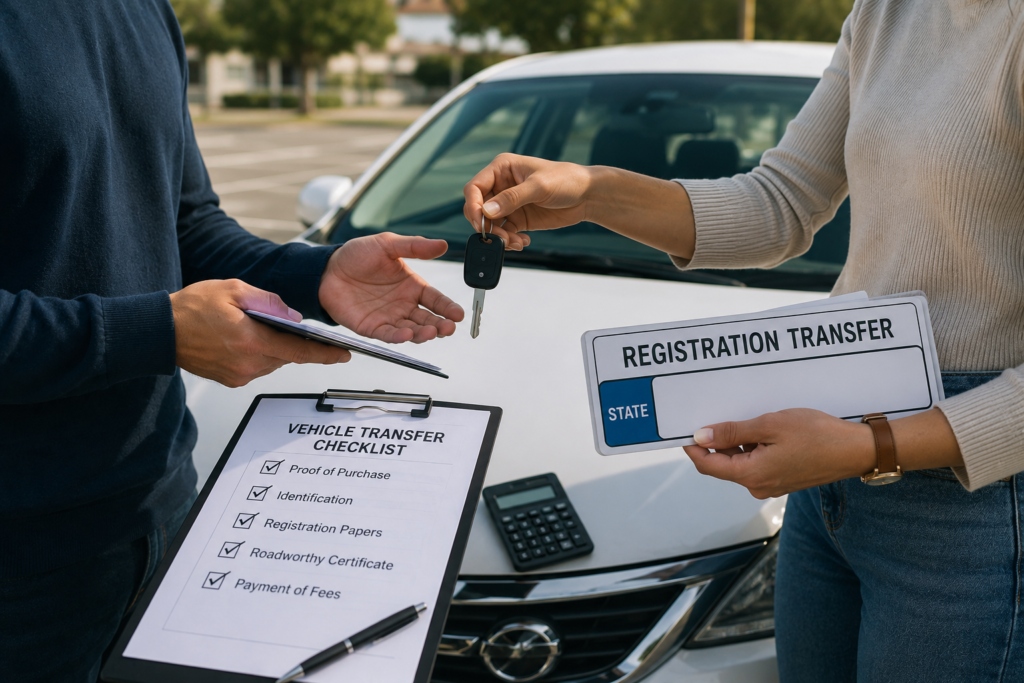
Although the process varies across Australia, the steps are straightforward.
If You Buy from a Dealership
Licensed dealerships normally handle much of the paperwork on your behalf. Depending on the sale, they may complete the registration transfer before you collect the vehicle or guide you through any remaining requirements.
Before taking delivery, confirm that the registration has been transferred correctly and ask when the registration expires so you know when the next renewal is due.
If You Buy from a Private Seller
Private sales require a little more responsibility from both the buyer and seller.
In most cases, you’ll need to:
- Obtain a signed proof of sale or receipt.
- Complete the registration transfer application.
- Provide proof of identity.
- Pay any applicable transfer fees and stamp duty.
- Meet any inspection requirements if your state requires them.
Some states allow registration transfers to be completed online, while others may require both parties to complete specific forms or attend a service centre.
Don’t Delay the Transfer
Most Australian states impose strict deadlines for transferring vehicle registration after purchase. Missing these deadlines may result in late transfer fees or other penalties, and until the registration is updated, ownership records may not accurately reflect the new owner.
Before completing any purchase, it’s also worth checking that the vehicle isn’t subject to outstanding finance or listed as a repairable write-off. A Personal Property Securities Register (PPSR) check can provide valuable information about the vehicle’s history and help you make a more informed buying decision.
Registering an Interstate Vehicle
Buying a vehicle from another state can open up far more options than shopping locally. Whether you’ve found a better price, a rare model or a vehicle in better condition, purchasing interstate has become increasingly common across Australia.
However, registering an interstate vehicle involves a few extra steps once it arrives.
Unlike a standard registration transfer, interstate vehicles need to be registered from scratch in the state where they’ll be permanently kept. This usually means cancelling the previous registration, meeting your new state’s inspection requirements and obtaining new number plates.
The exact process differs between states, but it depends on whether your state follows a similar sequence.
| Step | What You’ll Need to Do |
| 1. Transport the vehicle | Arrange for the vehicle to be delivered to your home state if it isn’t already there. |
| 2. Check inspection requirements | Your new state may require a roadworthy inspection or identity inspection before registration. |
| 3. Cancel the previous registration | If required, cancel the registration from the previous state and return the old number plates. |
| 4. Complete the new registration application | Lodge your application with your local transport authority. |
| 5. Pay the applicable registration fees | Registration costs, stamp duty and other charges may apply depending on your state. |
| 6. Receive your new registration and number plates | Once approved, your vehicle can legally operate under your new state’s registration. |
One of the biggest challenges for interstate buyers is simply getting the vehicle home safely. Rather than driving long distances, many owners prefer trusted car transport teams to save time, reduce wear on their vehicle and avoid adding unnecessary kilometres before the registration process is complete.
We help customers transport vehicles across Australia before they complete their local registration requirements. Whether you’ve purchased a car from another state or you’re relocating interstate, arranging transport first often makes the entire registration process much easier once the vehicle arrives.
How Much Does Car Registration Cost in Australia?
There’s no single registration fee that applies across Australia. The amount you pay depends on several factors, including where the vehicle is registered and the type of vehicle you own.
While it’s tempting to compare registration costs between states, the total amount often includes different government charges, insurance arrangements and vehicle classifications, making direct comparisons difficult.
Some of the factors that can affect your registration costs include:
- State or territory where the vehicle is registered
- Vehicle type, such as a passenger car, SUV, ute, motorcycle or commercial vehicle
- Vehicle weight, as heavier vehicles often attract higher registration fees
- Engine size or number of cylinders, depending on the state’s pricing model
- Registration period, with some states offering 3, 6 or 12-month registration options
- Compulsory Third Party (CTP) insurance, where applicable
- Stamp duty and transfer fees when purchasing a used vehicle
The table below provides a general overview of what influences registration costs.
| Factor | Can It Affect Registration Cost? |
| Vehicle weight | ✅ Yes |
| Engine size | ✅ Yes (state dependent) |
| Vehicle type | ✅ Yes |
| Registration period | ✅ Yes |
| State or territory | ✅ Yes |
| CTP insurance | ✅ Yes |
| Stamp duty | ✅ For ownership transfers |
Because registration fees are reviewed periodically, it’s always best to confirm the latest pricing with your state’s transport authority before submitting your application.
Understanding Compulsory Third Party (CTP) Insurance
Compulsory Third Party (CTP) insurance forms an important part of vehicle registration throughout Australia. Despite its name, many people misunderstand what it actually covers.
CTP insurance is designed to provide financial protection if someone is injured or killed in a road accident involving your vehicle. It covers personal injury claims made by other road users, passengers, cyclists and pedestrians, depending on the circumstances and the laws of each state.
What CTP Insurance Covers
In many cases , CTP insurance may cover:
- Medical treatment for injured people
- Rehabilitation and ongoing care
- Compensation for injuries sustained in a road accident
- Legal liability arising from eligible personal injury claims
What CTP Insurance Does Not Cover
CTP insurance does not cover damage to vehicles or property.
You’ll usually need comprehensive or third-party property insurance for protection against:
- Damage to your own vehicle
- Damage to another person’s vehicle
- Theft
- Fire
- Storm or flood damage
- Vandalism
For many drivers, comprehensive insurance provides additional peace of mind by covering risks that fall outside the scope of compulsory insurance.
CTP Insurance Varies Between States
One of the biggest differences between Australian states is how CTP insurance is arranged.
| State or Territory | CTP Arrangement |
| New South Wales (NSW) | Purchased separately as a Green Slip before registration. |
| Queensland (QLD) | Included in registration through the Queensland scheme. |
| Victoria (VIC) | Included through the Transport Accident Commission (TAC). |
| Western Australia (WA) | Included with vehicle registration. |
| South Australia (SA) | Included with registration through approved insurers. |
| Tasmania (TAS) | Included in registration. |
| Australian Capital Territory (ACT) | Included as part of the registration process. |
| Northern Territory (NT) | Included with registration. |
Because CTP arrangements can change over time, Always check the latest requirements with your state’s transport authority or approved insurer before registering your vehicle.
Roadworthy Certificates & Vehicle Inspections
Not every vehicle requires an inspection before registration, but in many situations, a roadworthy or safety inspection forms part of the registration process.
The purpose of these inspections is to confirm that a vehicle meets the minimum safety standards required for use on public roads. Inspectors typically examine critical safety components rather than the vehicle’s cosmetic condition.
During an inspection, items commonly assessed include:
- Braking system
- Steering components
- Tyres and wheels
- Suspension
- Lights and indicators
- Windscreen and mirrors
- Seatbelts
- General vehicle safety
If defects are identified, they generally need to be repaired before the inspection certificate can be issued.
Different States Use Different Names
You’ll notice different names for vehicle inspections depending on where the vehicle is registered.
| State or Territory | Inspection Name |
| New South Wales | Pink Slip or Blue Slip (depending on circumstances) |
| Queensland | Safety Certificate |
| Victoria | Roadworthy Certificate |
| Western Australia | Vehicle Inspection (where required) |
| South Australia | Inspection may be required in certain situations |
| Tasmania | Inspection may be required depending on the vehicle |
| Australian Capital Territory | Vehicle Inspection |
| Northern Territory | Inspection may apply in certain circumstances |
When Is an Inspection Usually Required?
You may be required to obtain an inspection if you are:
- Registering an interstate vehicle
- Registering an unregistered vehicle
- Transferring ownership in states that require a safety certificate
- Re-registering a vehicle after registration has expired
- Directed to obtain an inspection by your state’s transport authority
Inspection requirements aren’t identical across Australia, so it’s always worth checking the specific rules that apply in your state before arranging an appointment.
State-by-State Guide to Car Registration in Australia
Each Australian state and territory manages its own vehicle registration system, so the rules aren’t identical everywhere. Before registering a vehicle or transferring ownership, check the latest requirements published by the relevant transport authority.
The summaries below provide an overview of what most vehicle owners need to know.
New South Wales (NSW)
| Registration Requirement | Details |
| Registration transfer | Registration should be transferred within the required timeframe after purchasing a vehicle. |
| CTP insurance | A valid Green Slip (Compulsory Third Party insurance) must be purchased before registering the vehicle. |
| Vehicle inspection | A Pink Slip or Blue Slip may be required depending on the vehicle’s age or registration status. |
| Interstate vehicles | Vehicles brought into NSW require a Blue Slip inspection before registration. |
| Official website | Service NSW – https://www.service.nsw.gov.au |
Queensland (QLD)
| Registration Requirement | Details |
| Registration transfer | Registration transfer must be completed after purchasing the vehicle in accordance with Queensland requirements. |
| CTP insurance | Included as part of Queensland vehicle registration. |
| Vehicle inspection | A Safety Certificate is commonly required when selling or transferring a used vehicle. |
| Interstate vehicles | Vehicles moving permanently to Queensland must be registered with the Queensland Department of Transport and Main Roads. |
| Official website | Queensland Department of Transport and Main Roads – https://www.qld.gov.au/transport |
Victoria (VIC)
| Registration Requirement | Details |
| Registration transfer | Registration transfers can generally be completed online through VicRoads. |
| CTP insurance | Included through the Transport Accident Commission (TAC). |
| Vehicle inspection | A Roadworthy Certificate may be required depending on the type of transfer or vehicle. |
| Interstate vehicles | Interstate vehicles must be registered in Victoria once eligibility requirements have been met. |
| Official website | VicRoads – https://www.vicroads.vic.gov.au |
Western Australia (WA)
| Registration Requirement | Details |
| Registration transfer | Buyers are responsible for completing the registration transfer with the Department of Transport. |
| CTP insurance | Included with vehicle registration. |
| Vehicle inspection | A vehicle inspection may be required in certain circumstances, particularly for interstate vehicles. |
| Interstate vehicles | Vehicles moving permanently to Western Australia require inspection before registration. |
| Official website | WA Department of Transport – https://www.transport.wa.gov.au |
South Australia (SA)
| Registration Requirement | Details |
| Registration transfer | Registration transfers require the appropriate forms, transfer fees and applicable stamp duty. |
| CTP insurance | Included as part of the registration process. |
| Vehicle inspection | Inspection requirements vary depending on the vehicle and registration history. |
| Interstate vehicles | Interstate vehicles must meet South Australian registration requirements before being driven permanently in the state. |
| Official website | SA.GOV.AU – https://www.sa.gov.au |
Tasmania (TAS)
| Registration Requirement | Details |
| Registration transfer | Ownership transfers are completed through Service Tasmania. |
| CTP insurance | Included with vehicle registration. |
| Vehicle inspection | Some vehicles may require an inspection depending on their registration history. |
| Interstate vehicles | Interstate vehicles must be registered in Tasmania if they will be permanently kept there. |
| Official website | Service Tasmania – https://www.service.tas.gov.au |
Australian Capital Territory (ACT)
| Registration Requirement | Details |
| Registration transfer | Registration transfers require proof of ownership and payment of applicable fees. |
| CTP insurance | Included as part of ACT vehicle registration. |
| Vehicle inspection | Vehicle inspections may apply depending on the registration circumstances. |
| Interstate vehicles | Vehicles relocating permanently to the ACT must be registered locally within the required timeframe. |
| Official website | Access Canberra – https://www.accesscanberra.act.gov.au |
Northern Territory (NT)
| Registration Requirement | Details |
| Registration transfer | Registration transfers are managed through the Northern Territory Government. |
| CTP insurance | Included with registration. |
| Vehicle inspection | Certain vehicles may require inspection before registration. |
| Interstate vehicles | Vehicles brought into the Northern Territory for permanent use must meet local registration requirements. |
| Official website | NT Government – https://nt.gov.au/driving |
Important: Registration laws, inspection requirements and government fees can change over time. Always refer to your state’s transport authority for the latest requirements before registering or transferring a vehicle.
Australian Number Plates Explained
The transport authority issues number plates when a vehicle is registered and remains linked to its registration record for as long as it’s legally on the road. Most drivers only think about them when buying a car, moving interstate or replacing damaged plates, but understanding how they work can save time and avoid unnecessary paperwork during the registration process.

How Do You Get Number Plates?
When a vehicle is registered for the first time, the relevant state or territory transport authority issues a standard set of number plates.
If you’re buying a brand-new vehicle from a dealership, the registration and number plates are organised before you collect the vehicle. For used cars purchased within the same state, the existing standard plates normally remain with the vehicle and transfer to the new registered operator once the ownership paperwork has been completed.
The process is different when a vehicle is permanently relocated to another state. Because registration is administered separately by each jurisdiction, you’ll need to surrender the existing plates and receive a new set issued by your new state’s transport authority.
Can You Keep Your Existing Number Plates?
In many cases, standard number plates remain with the vehicle rather than the owner. If you’re buying or selling a registered vehicle within the same state or territory, those plates will transfer with the registration unless alternative arrangements have been made.
The situation is different when a vehicle is permanently moved interstate. Because each Australian state and territory operates its own registration system, you’ll generally need to return the existing plates and receive a new set issued by your new registration authority. This helps ensure the vehicle is correctly recorded in the state where it will be primarily kept.
Personalised number plates follow different rules. They are often owned separately from the vehicle, meaning they can be retained by the owner, transferred to another vehicle or, in some cases, sold, subject to the conditions set by the issuing authority.
Replacing Lost, Stolen or Damaged Number Plates
If your number plates are lost, stolen or become damaged to the point where they can’t be clearly read, they should be replaced as soon as possible. Driving with missing or illegible number plates may result in fines and can also create unnecessary complications if your vehicle is involved in an accident or investigated by authorities.
Most transport authorities allow replacement plates to be ordered online or through a customer service centre. You’ll generally need to confirm your identity, provide your registration details and pay the applicable replacement fee. If your plates have been stolen, reporting the theft to your local police before applying for replacements is also recommended.
Australian Number Plate Slogans
Many standard Australian number plates include a slogan representing the state or territory where the vehicle is registered. Plate designs have changed over the years, and personalised plates often follow different layouts, but the slogans below remain some of the most recognisable across Australia.
| State or Territory | Standard Plate Slogan |
| New South Wales | The First State |
| Queensland | Sunshine State |
| Victoria | The Education State* |
| Western Australia | Western Australia |
| South Australia | South Australia |
| Tasmania | Explore the Possibilities |
| Australian Capital Territory | Canberra – The Nation’s Capital |
| Northern Territory | Outback Australia |
*Plate designs, colours and slogans may vary depending on the type of number plate or personalised plate selected.
Common Registration Mistakes to Avoid
Most registration issues aren’t caused by complicated rules—they’re generally the result of simple oversights. Taking a little extra time to understand the process before buying or registering a vehicle can save you from unnecessary delays, additional costs and frustrating trips back to the transport office.
Common mistakes to avoid:
- Delaying the registration transfer
One of the most common mistakes buyers make is assuming the paperwork can wait a few weeks. Every state has its own deadline for transferring registration, and missing it can result in late transfer fees or other penalties. Completing the transfer soon after purchasing the vehicle is always the safest approach. - Assuming every Australian state follows the same registration rules
A requirement in Queensland may not apply in Victoria or Western Australia. Before relying on advice from friends or online forums, check the official transport authority for the state where the vehicle will actually be registered. - Skipping the inspection requirements
Some buyers only discover they need a roadworthy inspection after submitting their registration application. Whether it’s a Safety Certificate, Pink Slip or another inspection, confirming the requirements beforehand can save time and prevent unnecessary delays. - Thinking registration includes full insurance
This catches more people than you’d expect. Registration only satisfies the legal requirements for operating the vehicle, while CTP insurance is designed to cover eligible personal injury claims. If your vehicle is stolen, damaged in a storm or involved in a collision, those costs often won’t be covered unless you’ve arranged separate insurance. - Buying a used vehicle without checking its history
A quick PPSR search takes only a few minutes but can reveal valuable information, including whether the vehicle has outstanding finance, has been reported stolen or has previously been written off. It’s a simple check that’s well worth doing before handing over your money. - Forgetting to renew your registration
Registration renewal notices are easy to overlook, especially if you’ve recently moved house or changed your contact details. Setting a reminder on your phone or renewing early can help ensure your vehicle remains legally registered. - Not understanding how personalised number plates work
Unlike standard plates, personalised plates don’t always transfer with the vehicle. If they’re part of the sale, make sure both parties understand who owns the plates and whether they need to be transferred separately before the transaction is completed.
Conclusion
Registering a vehicle in Australia doesn’t have to be overwhelming. Once you understand the requirements for your state or territory, the process becomes much easier to manage. Whether you’re buying a brand-new car, purchasing a used vehicle, transferring ownership or moving interstate, taking the time to prepare the right documents and complete each step correctly will help you avoid unnecessary delays and extra costs.
If your vehicle is being relocated to another state, it’s often easier to organise the transport first and complete the registration once it arrives. This can save you from a long interstate drive, reduce unnecessary wear on your vehicle and make the overall moving process far more convenient.
At Move Oz Wheels, we help Australians transport cars, SUVs, utes and motorcycles safely between states every day. Whether you’ve purchased a vehicle interstate, are relocating for work, or simply need reliable vehicle transport, our experienced team can help get your vehicle where it needs to be. Once it arrives, you’ll be ready to complete the registration process with your local transport authority and get back on the road with confidence.

Leave A Comment